Overview
A "holographic" installation built around the objects that fill dk – a self-managed community bar in Moscow. Each object carries traces of its creators and visitors, forming a layered memory of the place.
Tools: 3D scanning, 3D modeling, AI-based image restoration, audio production, holographic display
Context: Exhibited at dk community bar, Moscow, 2025. Collaborative project with art union 2.23*
A "holographic" installation built around the objects that fill dk – a self-managed community bar in Moscow. Each object carries traces of its creators and visitors, forming a layered memory of the place.
Tools: 3D scanning, 3D modeling, AI-based image restoration, audio production, holographic display
Context: Exhibited at dk community bar, Moscow, 2025. Collaborative project with art union 2.23*
Concept
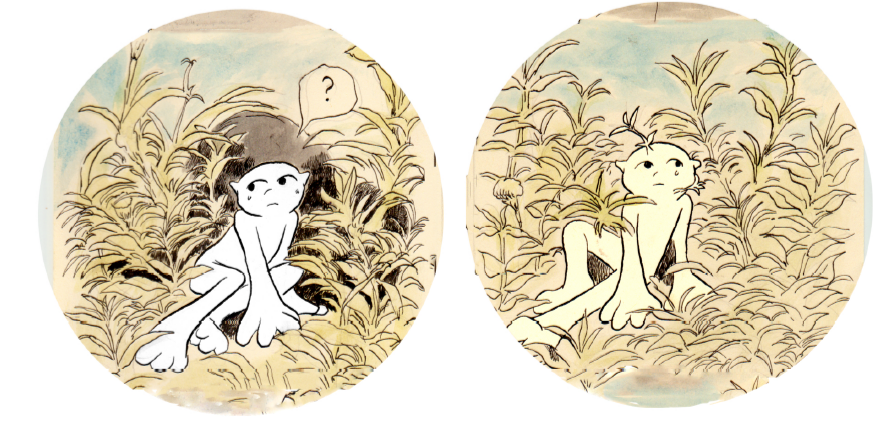
Every place accumulates objects that are no longer fully seen – things that have become furniture, background, habit. This installation treats them as a layered archive of memory: not of events, but of the everyday life that makes a space what it is.
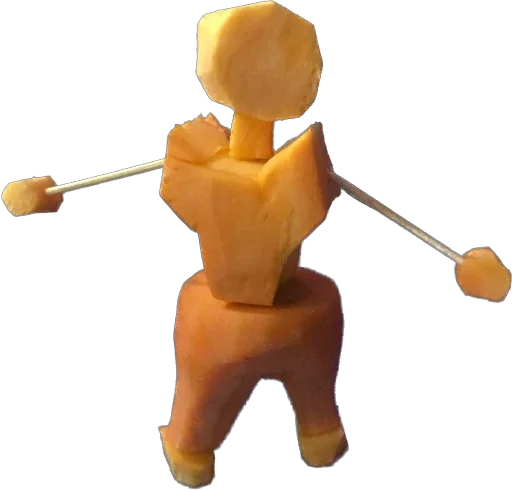
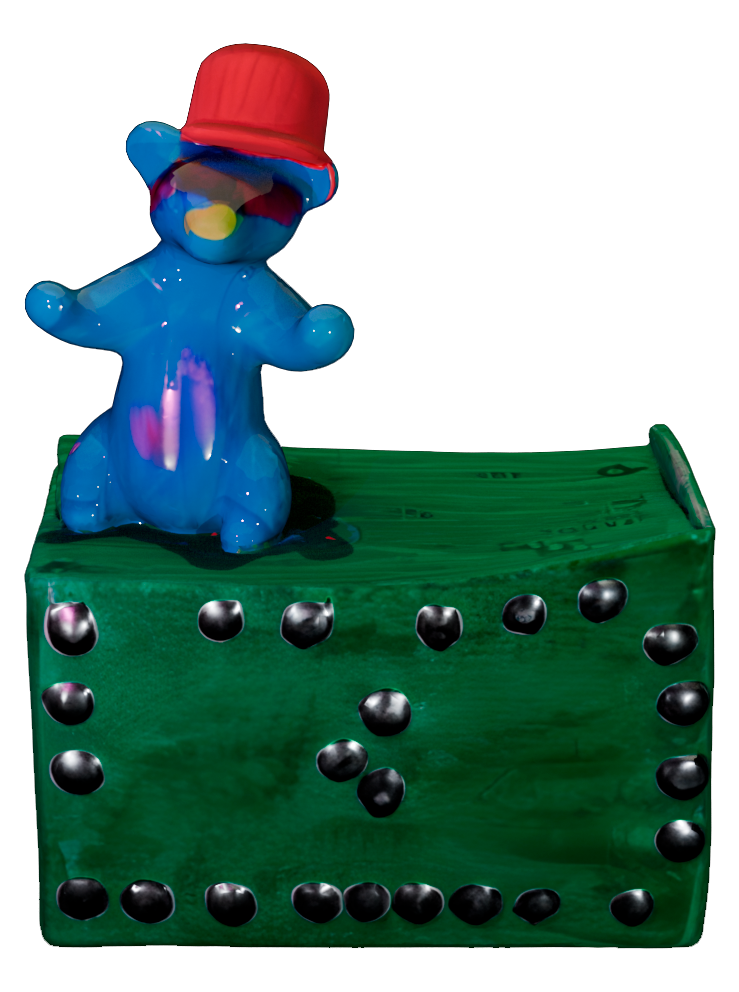
The work consisted of audio stories recorded by the bar's staff, recounting the histories of these objects. Each narrative was accompanied by a 3D animation of the corresponding item. Visitors put on headphones and looked into a custom-built holographic box as the objects appeared to float inside it – the familiar material environment unfolding into a shared archive of stories.
By pairing each object with the voice of someone who knows its history, the work makes the bar's invisible social fabric visible and audible. dk is a community bar built on principles of self-management, horizontality, and mutual assistance, a space where the values of anti-authoritarianism are not decorative but structural. Working with its community felt like a natural extension of our own direction: art as a form of collective attention to what a place holds, and what it quietly passes on.
By pairing each object with the voice of someone who knows its history, the work makes the bar's invisible social fabric visible and audible. dk is a community bar built on principles of self-management, horizontality, and mutual assistance, a space where the values of anti-authoritarianism are not decorative but structural. Working with its community felt like a natural extension of our own direction: art as a form of collective attention to what a place holds, and what it quietly passes on.


Framework
The project draws on three thinkers working at the intersection of technology, body, and action.
Gilbert Simondon provides the core: the technical object is not a passive tool but a process. Stability is not a final state but a temporary resolution of tensions. The machine does not work in the world – it works with it, and the environment becomes part of what the machine is.
Bernard Stiegler adds the question of translation: continuous bodily movement is grammatized – broken into discrete, technically readable elements. The hand does not enter the system as it is; it arrives as angle, delay, deviation, threshold. Something is always lost or smoothed in the conversion.
Yuk Hui frames the political dimension: technology is never neutral. Every system creates an ontology – decides what counts as movement, what counts as error, what counts as acceptable input. To pass through the interface, the body must first become legible to it.
Together, these form the question the game plays out: not "who controls whom" but how a shared condition of action is produced between a body, a device, and a system of measurement.
The project draws on three thinkers working at the intersection of technology, body, and action.
Gilbert Simondon provides the core: the technical object is not a passive tool but a process. Stability is not a final state but a temporary resolution of tensions. The machine does not work in the world – it works with it, and the environment becomes part of what the machine is.
Bernard Stiegler adds the question of translation: continuous bodily movement is grammatized – broken into discrete, technically readable elements. The hand does not enter the system as it is; it arrives as angle, delay, deviation, threshold. Something is always lost or smoothed in the conversion.
Yuk Hui frames the political dimension: technology is never neutral. Every system creates an ontology – decides what counts as movement, what counts as error, what counts as acceptable input. To pass through the interface, the body must first become legible to it.
Together, these form the question the game plays out: not "who controls whom" but how a shared condition of action is produced between a body, a device, and a system of measurement.
Process
Building on the holographic format developed in Pobegi Fest, this project expanded both technically and conceptually. The plywood structure was pre-modeled in 3D for precise assembly, updated with features including an integrated screen lid, headphone cable opening, and adjustable glass angle. The objects were scanned using RealityScan where possible; others were reconstructed through 3D modeling and AI-based image restoration. The installation ran for two weeks inside the bar.